

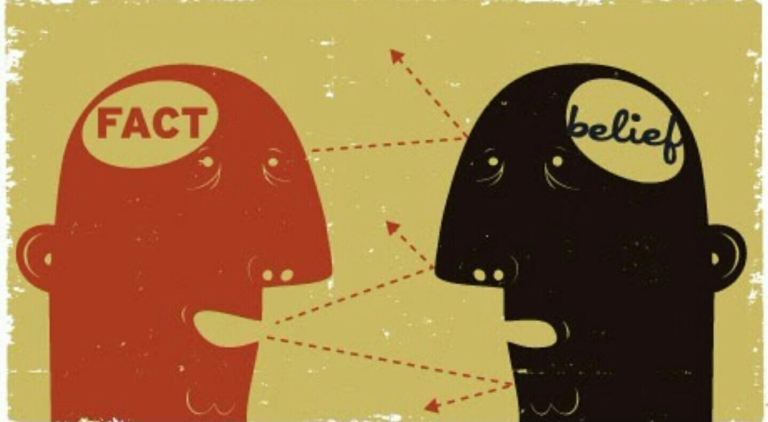

Human beings like to believe they think rationally. However, decades of psychological research demonstrate that judgment is often shaped by systematic mental shortcuts known as cognitive biases. These biases are not random errors; they are predictable patterns in thinking that influence perception, decision-making, and behavior.
Cognitive biases help the brain process information efficiently, but they can also distort reality. Understanding them improves critical thinking, emotional regulation, and professional decision-making.
What Are Cognitive Biases?
Cognitive biases are systematic deviations from rational judgment. They occur because the brain relies on heuristics—mental shortcuts that simplify complex decisions.
Psychologists Daniel Kahneman and Amos Tversky pioneered research demonstrating that humans consistently rely on intuitive thinking rather than analytical reasoning.
Kahneman later described two modes of thought:
- System 1: Fast, automatic, emotional
- System 2: Slow, deliberate, logical
Most biases originate from System 1 processing.
Common Cognitive Biases
1. Confirmation Bias
People seek information that confirms existing beliefs while ignoring contradictory evidence.
Example: Reading news sources that align only with personal viewpoints.
Impact: Reinforces polarization and reduces openness to correction.
2. Availability Heuristic
Judgments are influenced by how easily examples come to mind.
Example: After hearing about airplane accidents in the news, individuals may overestimate the risk of flying.
Impact: Distorts risk assessment.
3. Anchoring Bias
Initial information acts as a reference point, even if irrelevant.
Example: Seeing a high original price makes a discounted price seem like a better deal.
Impact: Influences financial and negotiation decisions.
4. Overconfidence Bias
People overestimate their knowledge, skill, or predictive accuracy.
Impact: Risky investments, poor forecasting, strategic miscalculations.
5. Loss Aversion
Research shows people feel losses more strongly than equivalent gains.
Impact: Reluctance to sell declining investments or leave unfulfilling situations.
Why Biases Exist
Biases are not flaws in design—they evolved as efficiency mechanisms. In early human environments, quick decisions increased survival odds. Analytical deliberation is cognitively expensive.
However, in modern environments—financial markets, healthcare decisions, digital media—these shortcuts can produce costly errors.
Cognitive Bias in Everyday Life
Biases influence:
- Hiring decisions
- Performance evaluations
- Political opinions
- Consumer purchases
- Relationship conflicts
For example, in workplace settings, confirmation bias may affect how managers interpret employee performance. Initial impressions can anchor future evaluations, regardless of new evidence.
In digital environments, algorithms amplify biases by showing content aligned with past behavior, reinforcing existing beliefs.
Can Biases Be Eliminated?
Complete elimination is unrealistic. However, awareness reduces vulnerability.
Evidence-based mitigation strategies include:
1. Structured Decision Frameworks
Using predefined criteria reduces emotional or intuitive distortions.
2. Seeking Disconfirming Evidence
Actively searching for opposing viewpoints counteracts confirmation bias.
3. Slowing Down High-Stakes Decisions
Engaging System 2 thinking improves analytical accuracy.
4. Diverse Input
Consulting individuals with varied perspectives reduces groupthink and shared bias.
Bias and Emotional Regulation
Cognitive distortions often drive emotional responses. For example:
- Catastrophizing (expecting worst-case outcomes)
- Mind reading (assuming others’ intentions)
- Personalization (interpreting neutral events as personal attacks)
Cognitive Behavioral Therapy (CBT), influenced by earlier rational-emotive frameworks, addresses distorted thinking patterns by challenging assumptions and replacing them with balanced interpretations.
Modern Relevance
In an era dominated by rapid information flow, social media, and algorithmic feeds, cognitive biases shape public discourse and personal identity.
Understanding biases improves:
- Media literacy
- Financial decision-making
- Leadership strategy
- Conflict resolution
- Self-awareness
Organizations increasingly integrate behavioral science insights into marketing, product design, and policy-making.
Conclusion
Cognitive biases are embedded in human cognition. They simplify complex environments but introduce predictable distortions.
Rather than viewing bias as weakness, it is more accurate to view it as a default setting. The advantage lies not in eliminating bias but in recognizing when it operates.
Developing reflective habits—pausing, questioning assumptions, and inviting alternative perspectives—strengthens decision quality and psychological resilience.
Awareness transforms unconscious influence into conscious evaluation.