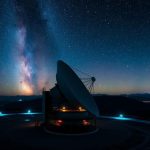



For centuries, astronomers wondered whether planets existed beyond our Solar System. Today, advances in astronomy have confirmed that they do. These distant worlds, known as exoplanets, orbit stars outside our own planetary system and have become one of the most active areas of modern space research.
The first confirmed discoveries of exoplanets in the 1990s transformed astronomy by demonstrating that planetary systems are common throughout the Milky Way. Since then, thousands of exoplanets have been identified using both ground-based observatories and dedicated space telescopes. Each discovery has expanded scientists’ understanding of how planets form and evolve.
Astronomers use several methods to detect exoplanets because these worlds are usually too distant and too faint to observe directly. One of the most widely used techniques is the transit method. When a planet passes in front of its host star from Earth’s perspective, it blocks a tiny fraction of the star’s light. Sensitive instruments measure these small changes in brightness to identify potential planets.
Another important technique is the radial velocity method. As a planet orbits its star, its gravitational pull causes the star to move slightly. By studying subtle shifts in the star’s light spectrum, astronomers can estimate the planet’s presence, mass, and orbital characteristics.
Exoplanets display remarkable diversity. Some are rocky worlds similar in size to Earth, while others are enormous gas giants larger than Jupiter. Scientists have also identified “super-Earths,” which are larger than Earth but smaller than Neptune, and “mini-Neptunes,” a category not found within our own Solar System.
One of the most important goals of exoplanet research is identifying planets located within the habitable zone of their stars. This region is generally defined as the range of distances where temperatures may allow liquid water to exist on a planet’s surface, depending on atmospheric conditions. Being in the habitable zone does not confirm that a planet supports life, but it makes the world particularly interesting for further study.
Modern space telescopes can also analyze the atmospheres of some exoplanets. By examining how starlight passes through an atmosphere during a transit, scientists can identify certain gases and chemical compounds. These observations help researchers understand atmospheric composition, climate conditions, and planetary evolution.
Artificial intelligence has become an increasingly valuable tool in exoplanet research. Machine learning algorithms help scientists analyze enormous datasets generated by space telescopes, improving the detection of subtle signals that might otherwise be overlooked.
Future missions are expected to improve the search for Earth-sized planets and provide more detailed observations of planetary atmospheres. New observatories with larger mirrors and more advanced instruments will enable researchers to study increasingly distant planetary systems with greater precision.
The discovery of exoplanets has fundamentally changed humanity’s perspective on the universe. Rather than viewing our Solar System as unique, astronomers now recognize that planets are widespread throughout the galaxy. Each newly discovered world adds another piece to the puzzle of planetary formation and brings scientists closer to understanding the incredible diversity of planetary systems beyond our own.